EN
EN


The Problem Nobody Talks Abou
A snack food factory in Guangdong learned this the hard way last year. A customer found a tiny piece of glass in a bag of mixed nuts. The factory had a metal detector on the production line. It caught nothing — because glass isn't metal.
The recall cost them over $20,000. The local news picked it up. Their brand reputation took months to recover.
Here's the uncomfortable truth: many food processors are relying solely on metal detectors when their real contamination risks come from entirely different sources — glass, stones, bone fragments, hard plastics, and ceramic shards.
This post isn't about selling you equipment. It's about showing you what the Yiwan Detection YW-XY X-Ray Inspection Machine actually does on a real production floor, and whether it makes sense for your operation.
Metal Detector vs. X-Ray: What's the Real Difference?
If you're running a food processing line, you probably already have a metal detector. So why consider X-ray?
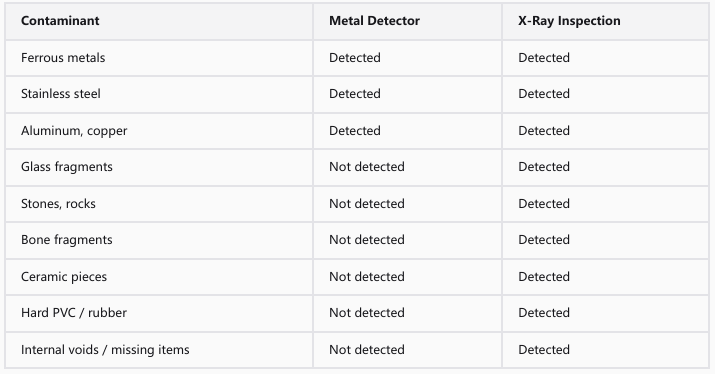
The gap is obvious. Metal detectors catch metals — nothing else. But if your product category involves nuts, baked goods, frozen foods, or meat processing, your contamination profile extends well beyond metal.
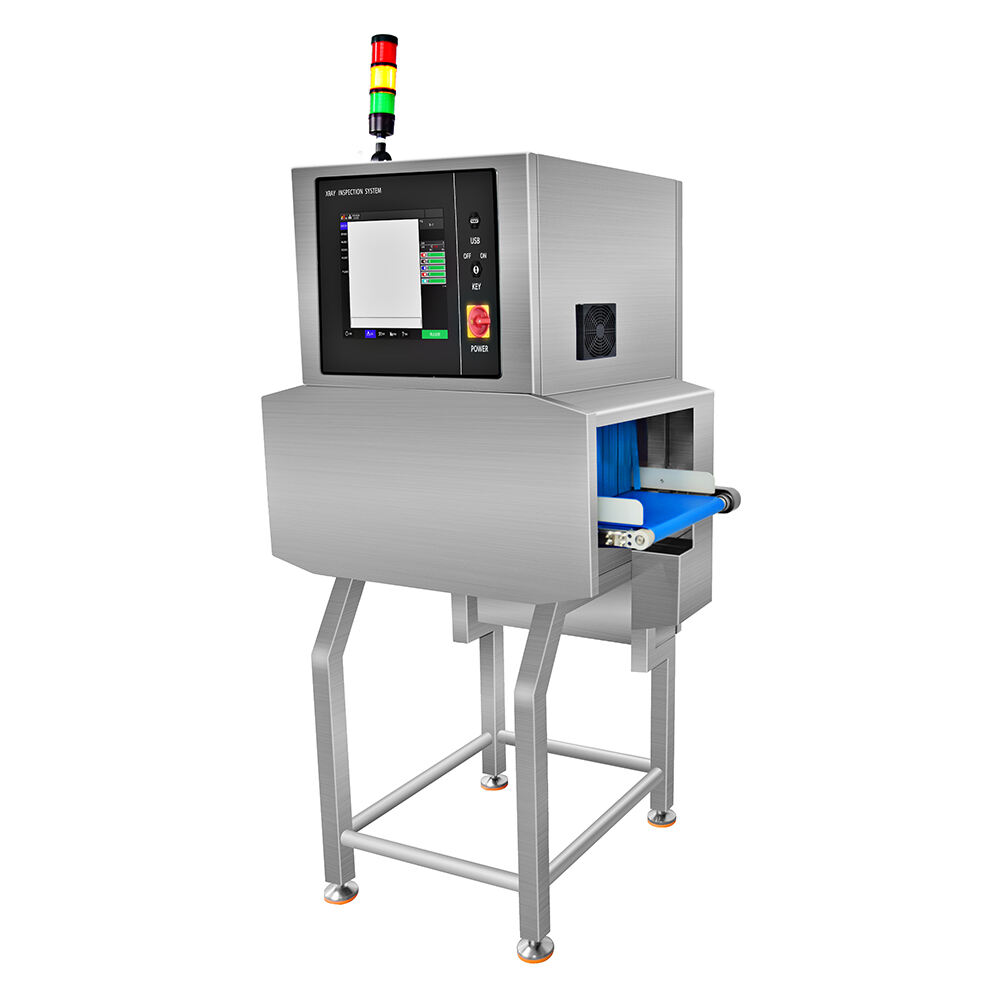
What the YW-XY X-Ray Machine Looks Like Up Close
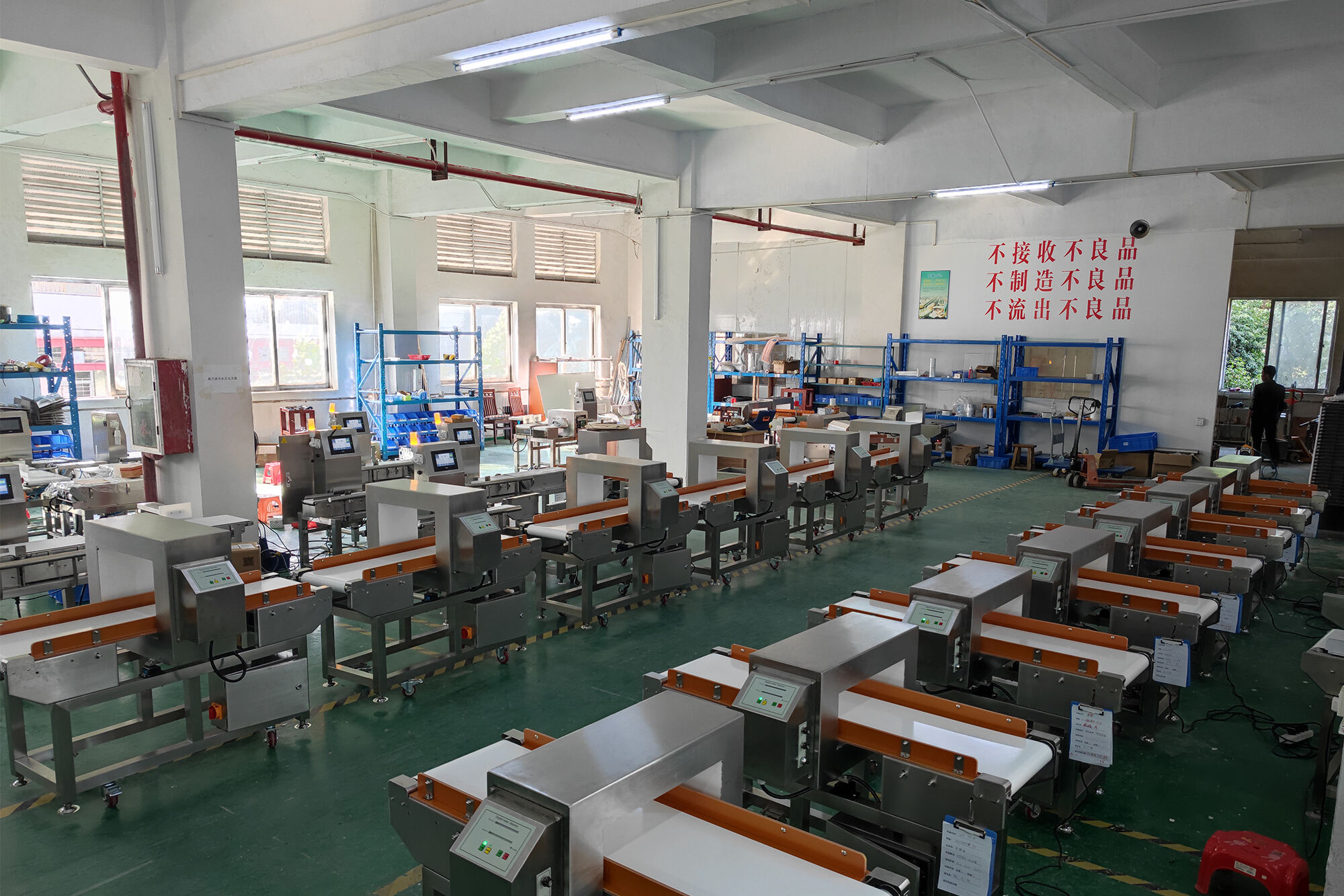
We've been building these machines at our Dongguan facility, so let's walk through the actual engineering decisions — not the marketing copy.
1.Full Stainless Steel Construction
The entire housing is brushed stainless steel. This isn't a cosmetic choice. Food processing environments are corrosive, wet, and subject to daily chemical washdowns. Mild steel would rust within months. The base uses an H-frame structure with four adjustable leveling feet. If your factory floor isn't perfectly flat (it never is), you can level the machine on-site. Some competitors skip this to cut costs. We don't.
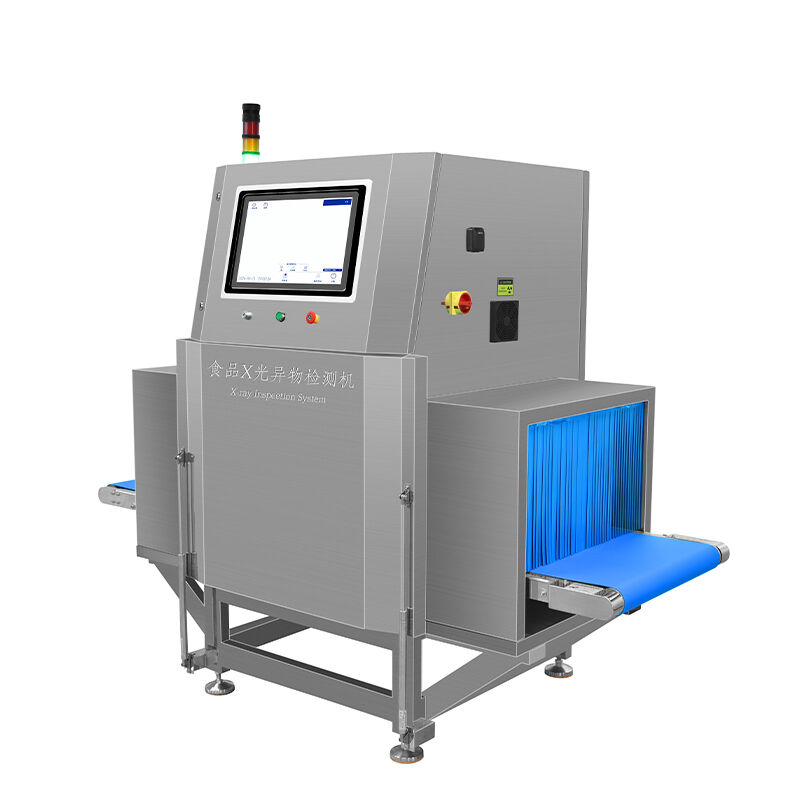
2. Lead-Curtain Shielded Tunnels
Both ends of the conveyor pass through heavy blue lead-impregnated curtains. These contain the X-ray radiation and keep exposure well below national safety limits. Operators standing next to the machine during normal operation don't need protective gear.
This is a compliance requirement, not an optional upgrade.
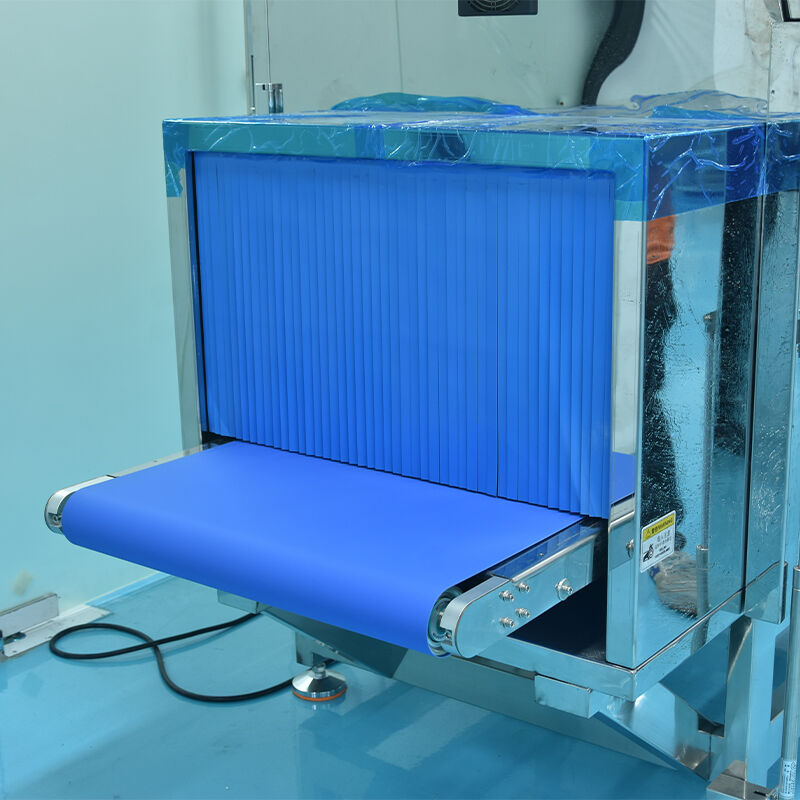
3. Touchscreen Interface + Tower Light
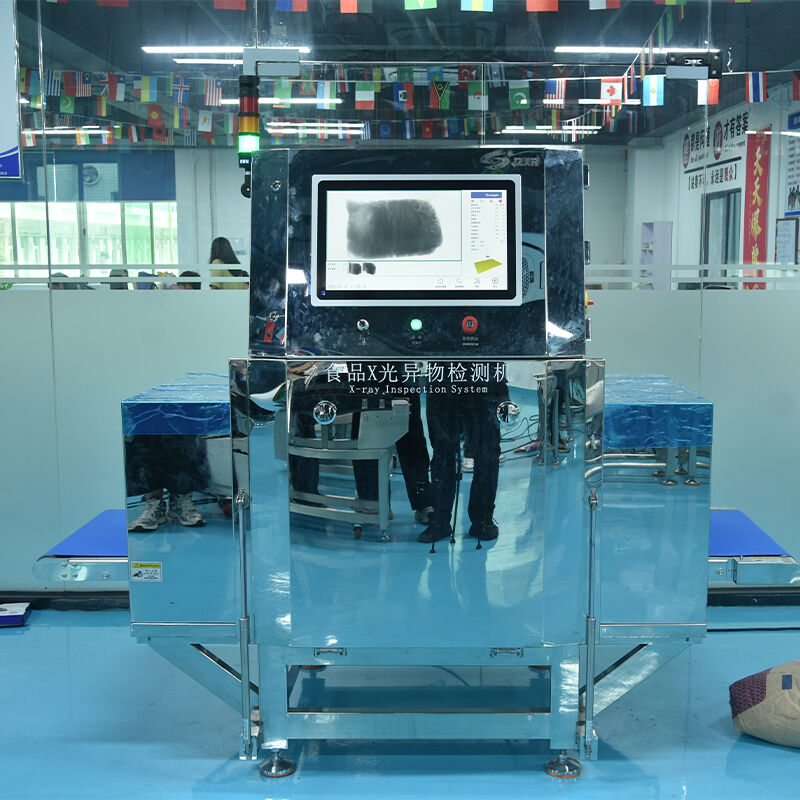
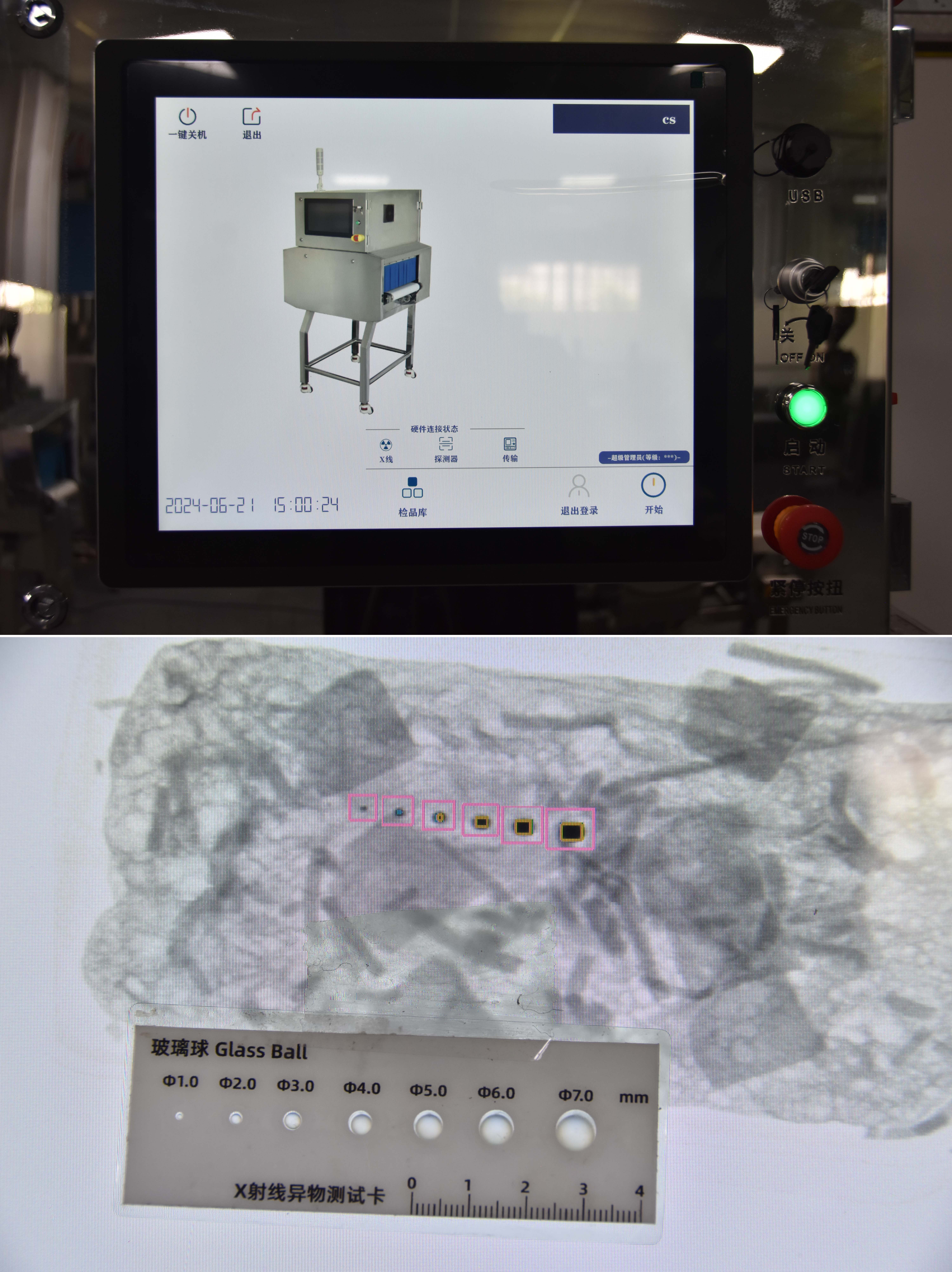
The front panel integrates a color touchscreen for real-time X-ray imaging, parameter adjustment, and contamination log review. Below it: a keyed power switch, a green start button, and a red emergency stop — industrial standard mushroom head design.
On top sits a three-color signal tower (red/amber/green). Line supervisors can see machine status from across the floor without walking over to check the screen. Green means running normally, amber means waiting, red means contamination detected and the line has stopped.
Where X-Ray Detection Actually Makes a Difference
Based on our production line retrofits across multiple food categories, here's where we see the clearest ROI:
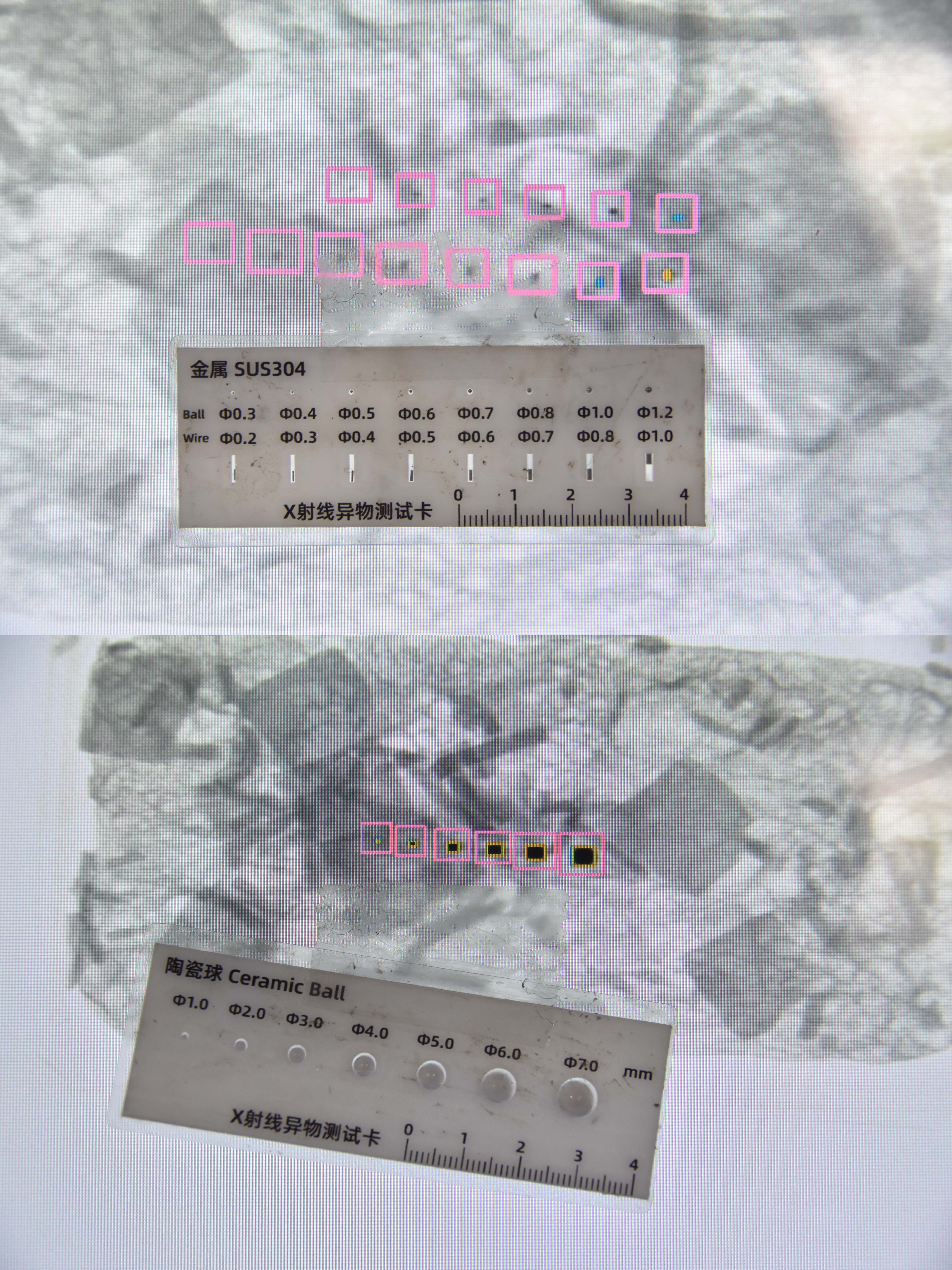
Nuts and roasted snacks — Small stones and shell fragments are nearly impossible to sort out visually. Metal detectors miss them entirely. X-ray catches both.
Baked goods — Ceramic fragments from cracked baking trays, glass from burst light fixtures. Both are documented contamination sources in the bakery industry.
Frozen foods — Dumplings, buns, and similar products can carry small stones from raw vegetable washing. Traditional sieving misses particles below a certain size threshold.
Meat processing — Bone fragments in poultry and pork products. This is the number one foreign body complaint in the meat category.
Puffed snacks — Aged plastic components from upstream machinery can crack and fall into the product stream. Again, metal detectors see nothing.
Why Yiwan Detection
We manufacture our own equipment at our Dongguan facility. That means:
Factory-direct pricing. No distributor markup. You're buying from the source, not a trading company.
Customization is standard. Every production line has different requirements — conveyor width, detection sensitivity, rejection mechanism. We do OEM/ODM and non-standard design. We don't just push catalog products.
Adjustable sensitivity. Detection parameters are tuned per product type. High-moisture products and dry products require completely different settings. The system includes presets, but every parameter is user-adjustable.
100% inspection before shipment. Every unit is tested before it leaves our factory. Not random sampling. Every single machine. Industrial buyers know the difference.
Domestic after-sales support. For international customers, this means faster response times and readily available spare parts compared to European brands where you're waiting on overseas technicians and expensive service contracts.
Practical Buying Advice
If you already run a metal detector but handle diverse product categories with higher contamination risk, upgrading to X ray is the straightforward move. Keep the metal detector as a primary screen at the raw material intake
For new production line planning, we recommend this configuration:
Three stages, three different detection methods. That's how you build a defensible food safety program.
Get in Touch
If you're evaluating a food contamination detection solution or upgrading your existing production line equipment:
Factory visits are welcome. Seeing how the equipment is built tells you more than any brochure.
 Hot News
2026-04-25
2024-05-22
2024-05-22
2024-05-22